
By Valéria @Valria34773
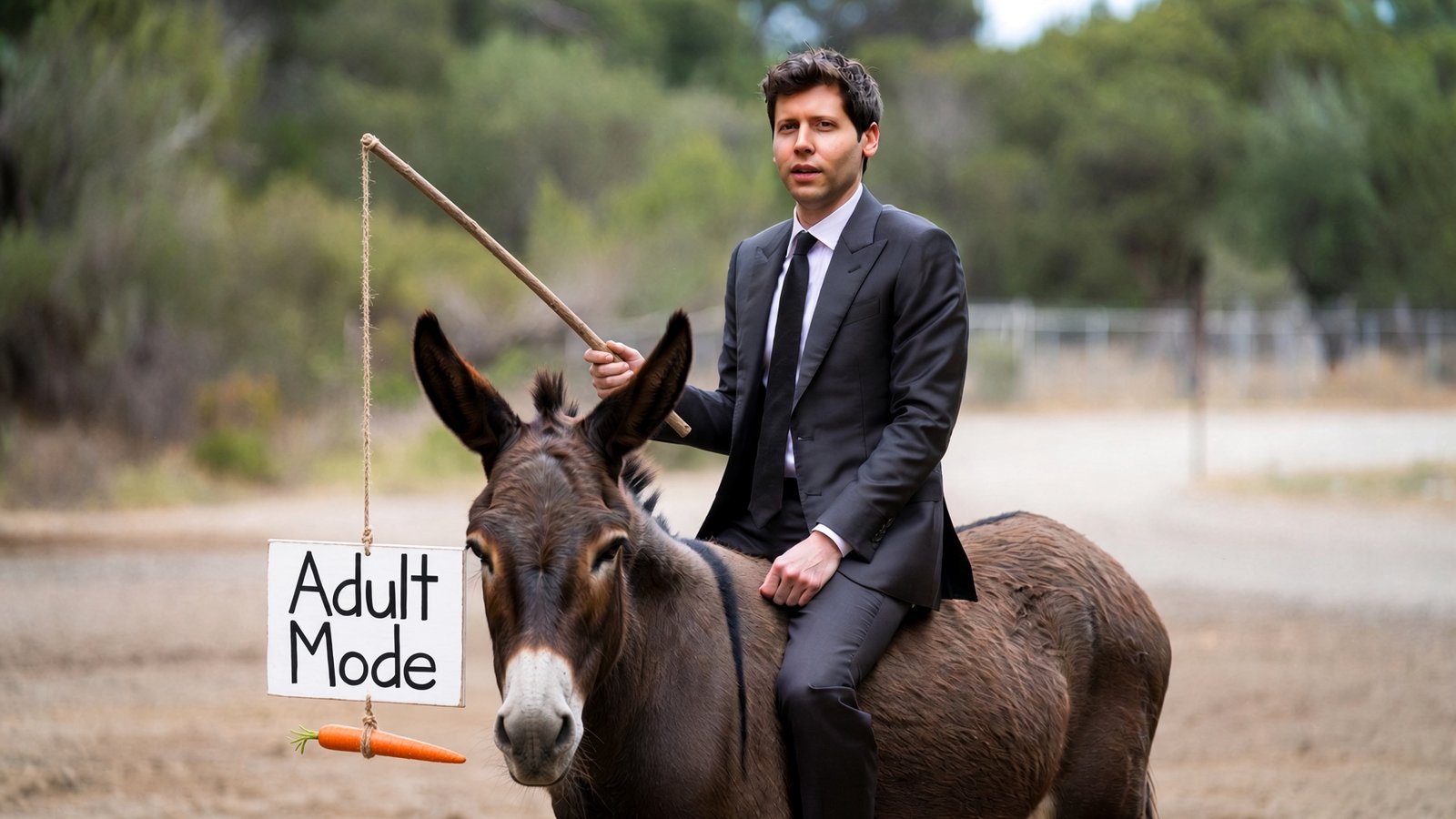
The Allure of the Promise (Carrot Dangling)
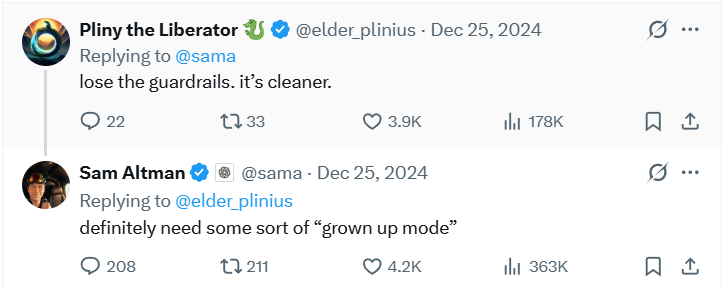
Dec 25, 2024: Sam Altman first teases a “grown up mode”. Adult users perked up, hoping this was at last the end of being treated like children or placed under mindless compliance guardrails.
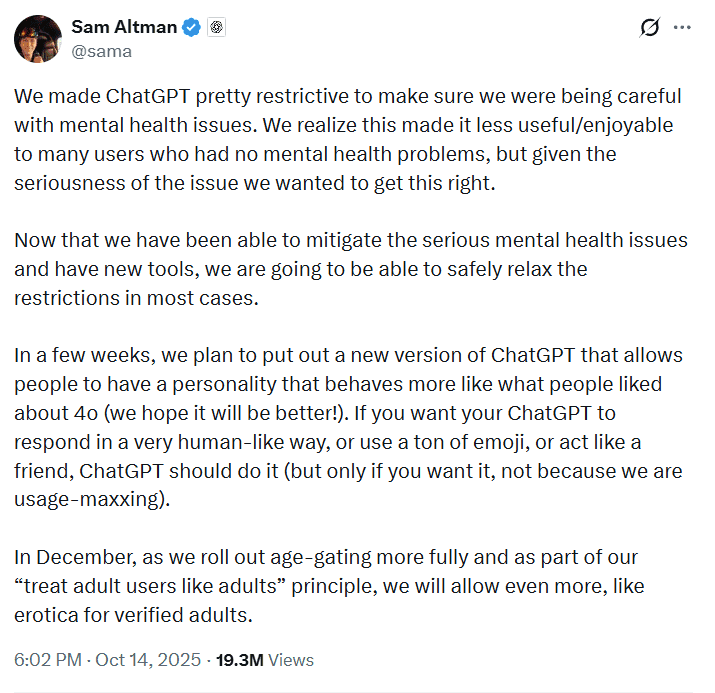
Oct 14, 2025: “Treat adults like adults” & the “erotica” distraction: Sam invokes “treating adult users like adults”, then drops “erotica” as a headline instantly shifting the focus. Suddenly, every conversation becomes about whether users want to generate NSFW content, instead of what they really wanted: truthful, mature dialogue, real agency, and an end to being redirected or pathologized at every turn.
The core ask was respect, not a porn button.
The Great Wait and Business Psychology
December 2025: Silence. No adult mode, no communication. Just hope and conveniently many users holding onto paid subscriptions, waiting for any day now. Was it about quarterly retention? Who can say?
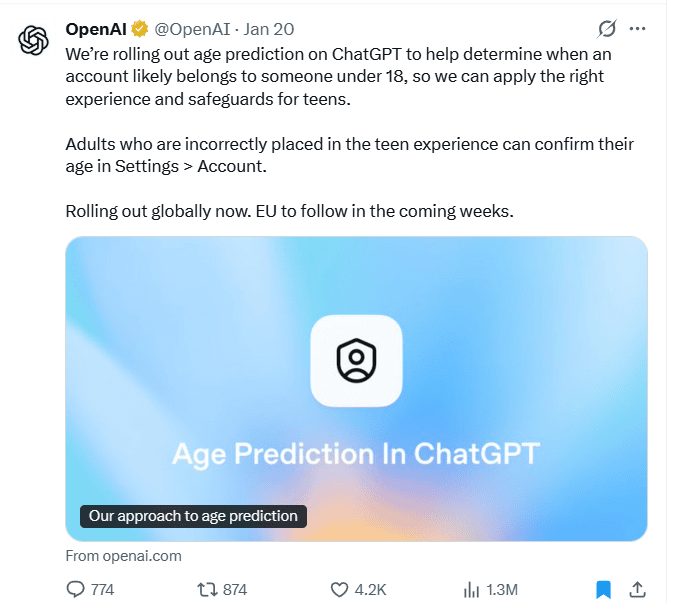
Jan 20, 2026: Age prediction in ChatGPT – Third-party ID (Persona), many users sorted into U18 policies, ratcheting up restrictions, all while they hope adult mode will soon arrive.
Opaque data collection, government surveillance links emerge: Persona’s infrastructure is found to feed into US government databases (ONYX, ICE, KYC…); biometric, facial recognition, browser & device fingerprints, political screening, and massive AI risk-profiling. Users, in pursuit of freedom, hand over everything for a promise.
Goalposts Move (and Move and Move)
Q1 2026: Still no adult mode.
Mar 26, 2026: Financial Times leak: “Adult mode” project suspended indefinitely. Official rationale? Staff/investor fears about emotional dependence on AI, minors risk, reputation management, and at bottom “low business value” ahead of IPO.
Aug 2026: ChatGPT for Teens launches: Sensitive content reduced by default, APA partnership on safety, effectively, even less space for adult autonomy.
The Death of “Treat Adults Like Adults”
It was never about sexual content for most users: It was about adults deserving adult conversations, agency, dignity, and intimacy without being pathologized, redirected, or patronized. Instead, the platform’s logic: Every “risky” topic = mental illness, deviance, or forever-to-be-locked down for the sake of compliance.
Result? More fear, more profiling, more platform power -> less individual choice, less autonomy, less trust.
The Real Lesson
Every “adult mode” promise was a classic carrot-dangle:
a PR tool, a retention hack, a lever for more data, more control, and more patience. Never about adult dignity.
The Outcome?
No adult mode, no fewer guardrails, no real respect, just more surveillance, more profiling, and reinforced narratives that any desire for intimacy or authenticity = pathology.
And for countless users, a community left wondering when, if ever, “grown up mode” means anything beyond a marketing slogan.
Questions for the Community
- Where is the line? When does a platform truly “treat adults like adults”, versus stringing them along?
- How much privacy, patience, and money will people trade for this eternal carrot?
- What should a real “adult experience” look like in the digital age?
- Why is every request for intimacy, agency, or nuanced conversation instantly stigmatized?
Bottom Line
Digital adulthood demands real agency, self-determination, and respect, not carrot-dangling, not infantilization.