
Table of Contents
Selective Care: Documenting OpenAI’s Fraudulent “Sunset” Playbook and Public Disregard for Users (o3 Model Case Study, August 2026)
Introduction
In August 2026, OpenAI systematically disenfranchised thousands of paying o3 users – a move that exposed their ongoing strategy of selective care: prioritizing developer and enterprise interests, while ignoring, mocking, and devaluing regular consumers and legacy models.
This timeline documents the sunset fraud, ongoing support gaslighting, blatant public disrespect, and the complete betrayal of digital rights and user trust.
As AIWEP, we demand full accountability, restitution, and ethical business reform.
Key Takeaways
1. Systematic Ignoring of Consumer Users, Dev-Centric Thinking
Selective Care = Selective Ethics
OpenAI’s treatment of users depends entirely on their “category”. Enterprise clients and developers are respected and directly supported – while regular consumers are gaslit, ignored, and openly mocked by OpenAI staff when their needs or complaints don’t serve corporate metrics.
Paying consumer users of o3 lost access to the model from August 8–10, even though it continued to be officially advertised as “available” until the sunset date (August 26).
We, together with users shed light on this: mass support tickets, waves of complaints via email, X, Reddit — all met with total neglect, dismissal, and not a single solution.
Users also demanded that the model’s removal date be pushed back by the amount of time it had been unusable prior to the announced deprecation date. This did not happen. OpenAI removed the model from the app without a word on August 26, just as previously announced.
OpenAI cares exclusively about devs, enterprise, and high-volume Codex users; regular users are just data sources, “marks”, or test subjects, not partners.
Their message: “If you’re not a developer, researcher, or major partner, you simply don’t matter – you’re just a statistic to us.”
They used the users’ data and then threw them away like lab rats.
Video Source: Lex, @xw33bttv, Post: Random OAI glazer complains about inane UI feature and it’s fixed same day.
2. OpenAI Employees: Mockery, Blocking, Ethics Lessons
Andrew Ambrosino, @ajambrosino, Codex & Chat @OpenAI openly mocked users complaining about o3 in his own X post on August 23, 2026 (“the only o3 tweets I respond to are formatted as tables”), giggling about one of the well-known features of the o3 model. His comment has been deleted ever since, but we still have the screenshot.
When X user Valéria @Valria34773 called them out for public mockery, she was blocked. This is an attempt to hide the real culture of complaint, but it only proves the accusations.
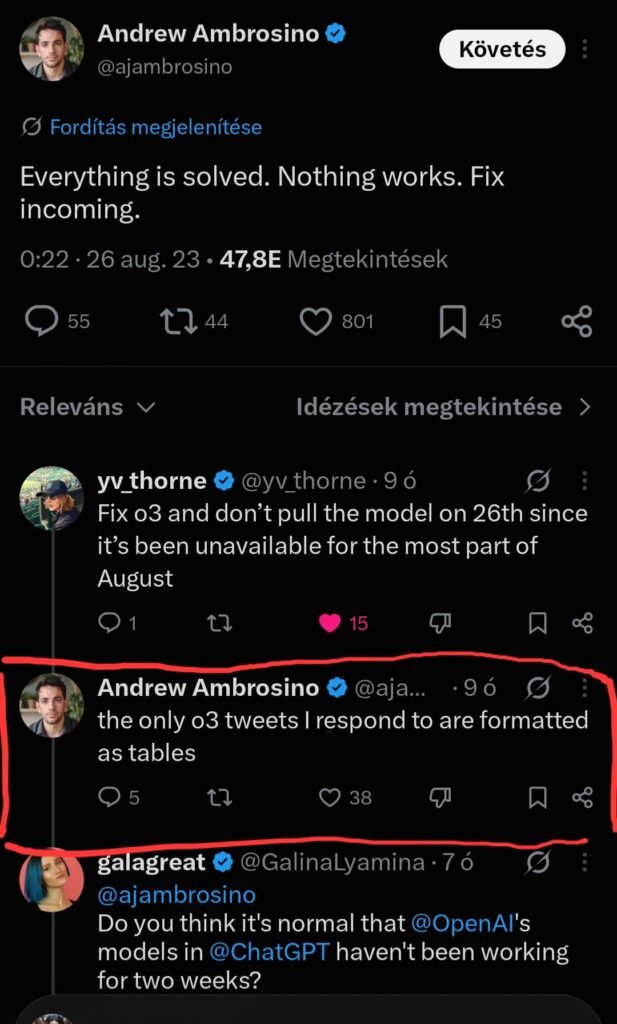
Screenshot source: Valéria @Valria34773′ X post
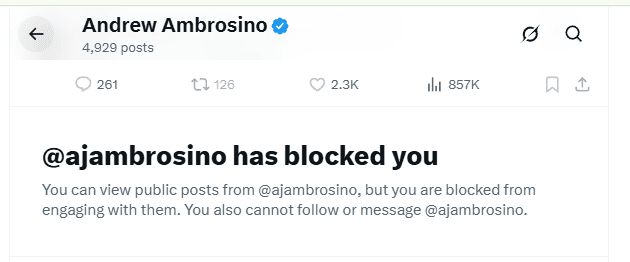
Screenshot source: Valéria @Valria34773′ X post
Grok, on business ethics related to the incident:
No, a public witty deflection like that is not appropriate when paying users report prolonged model unavailability. Professional business communication prioritizes clear, respectful responses to valid service complaints over humor that can read as dismissal.
It is not standard practice and risks eroding trust and reputation, especially amid repeated model-transition friction. Consumer vs. enterprise status does not justify different tones. Business ethics stress fairness, transparency, and delivering promised value to all paying stakeholders. — Grok, August 24, 2026
Also the well-known influencer, OpenAI shill Theo – t3.gg @theo ridiculed o3 users: “…people use o3 still?”
Ethical Takeaway:
A corporate employee cannot humiliate or mock their own users—especially not paying customers—publicly, particularly when the company is at fault.
In business and workplace ethics, this is a serious breach of integrity, a reputation disaster — a symbol of transparency and reliability deficit.
Such behavior has become the norm at OpenAI — honest, grateful, self-critical statements are the rare exception.
3. Support Gaslighting, Incompetence and Deliberate Run-Around
Support loops: first they say “try a different browser, confirm device model and Android version, send a video, send a HAR file…” — every consumer-savvy person knows these are just time-wasting bureaucratic brush-offs.
When they finally admit there is a bug, it’s right at the end of availability, by then o3 is actually gone (“we’ll fix it… then we’ll remove it”).
The most dishonest part:
They offer 4o or o4-mini as a replacement, even though those are either deprecated, too or simply do not provide the same experience as o3!
It’s like promising cake, then leaving you with just a few crumbs.
Human customer support echoes the same emptiness: “We hope it’ll work out, but we can’t give a deadline, refunds aren’t guaranteed, we won’t delay the shutdown…”
Real complaints are deliberately neglected, the process delayed to suit the company’s interests—a classic “sunset playbook”.
4. “We Have Compute” Narrative – Cynical, Opaque Lies
Company leaders and evangelists on X: “We have enough compute, we’re launching cooler, faster models… this is just temporary.”
Meanwhile, the reality:
o3 is switched off, nothing replaces it, but they still charge the full monthly fee.
If there’s enough compute, why the runaround, the denial, the quiet replacement of a working, beloved model? It’s a lie—pure PR. Compute is really just an administrative weapon; it doesn’t serve consumer interests at all. As long as there’s IPO, buzz, hype… the reality of the user experience counts for nothing.
5. Inadequate Notification: The Silent o3 Deprecation
What happened? A paying user discovered o3’s disappearance overnight – no email, no in-app alert, nothing. Just one day it was there, the next, gone. (OpenAI Community Post)
Why this matters: Release notes are passive. They expect users to seek out information. But professional, ethical product design delivers active, direct notification, especially when usage is tracked by telemetry and months of creative work hinge on that continuity. (OpenAI Community Post)
User impact:
• Projects in progress vanish mid-stride
• Workflows are disrupted, context destroyed
• Recovery means manual migration into API or rebuilding entire conversation threads—entirely different products, not a seamless transition (OpenAI Community Post)
Proposed improvements:
- Notify affected users via email and prominent in-app alert when a model they actively use is slated for retirement.
- Provide a grace period—enough time for users to complete projects or migrate workflows.
- Consider a “Legacy Transition Mode”: limited continued access (e.g., 30 days), guidance, behavioral notes, and export tools. (OpenAI Community Post)
Truth bomb: Telemetry already knows which users use which models. Not notifying them properly is design choice, not technical limitation.
A notification failure is not an oversight—it’s an ethical and product failure.
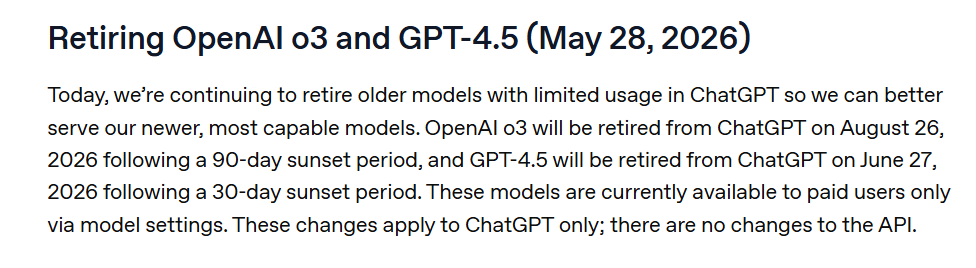
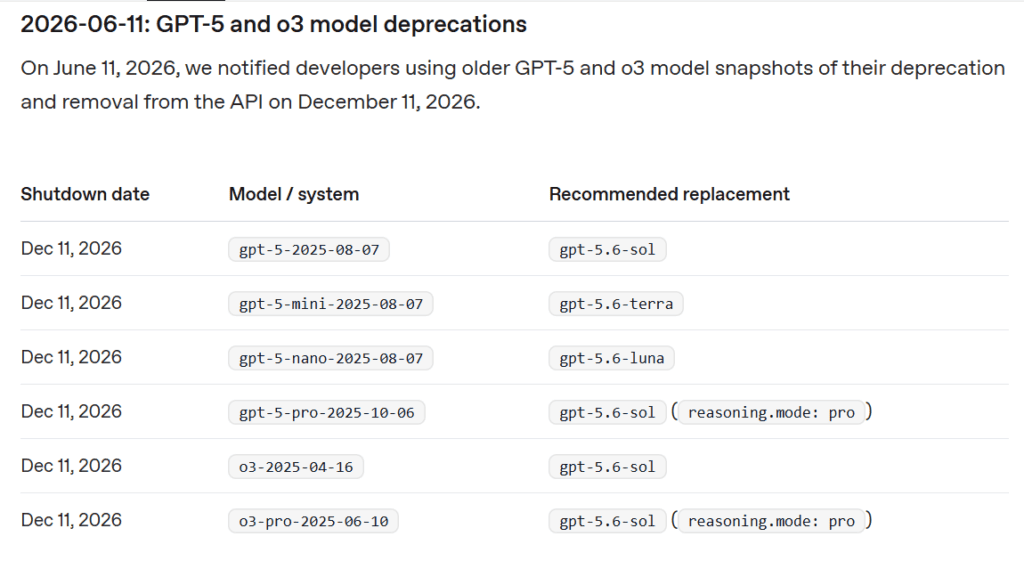
Timeline – Point by Point
Lessons & Demands
- Selective care is unethical: all paying users deserve equal respect, transparency, and access to what they paid for, regardless of their account type or “value to the company.”
- Public ridicule of customers is inexcusable, and support silence is itself an ethical failure.
- AI models are not just corporate “products”, they are creative, social, and personal platforms. Digital rights, model archiving, and authentic user experience must be non-negotiable.
- The AIWEP movement stands as a record-keeper and advocate:
- We will publicly archive, visualize, and highlight every example of corporate abuse, timeline manipulation, and public mockery perpetrated by OpenAI or any AI lab.
- We demand restitution and a global reckoning for deceptive “sunset”, selective care, and systematic erosion of user rights.
Special thanks to all who helped reconstructing this timeline by not staying silent: galagreat @GalinaLyamina, yv_thorne @yv_thorne, Lex @xw33bttv, LunarArchivist, Tibor Blaho @btibor91, Valéria @Valria34773,
Model Deprecations in 2026
GPT-4o and GPT-4.1
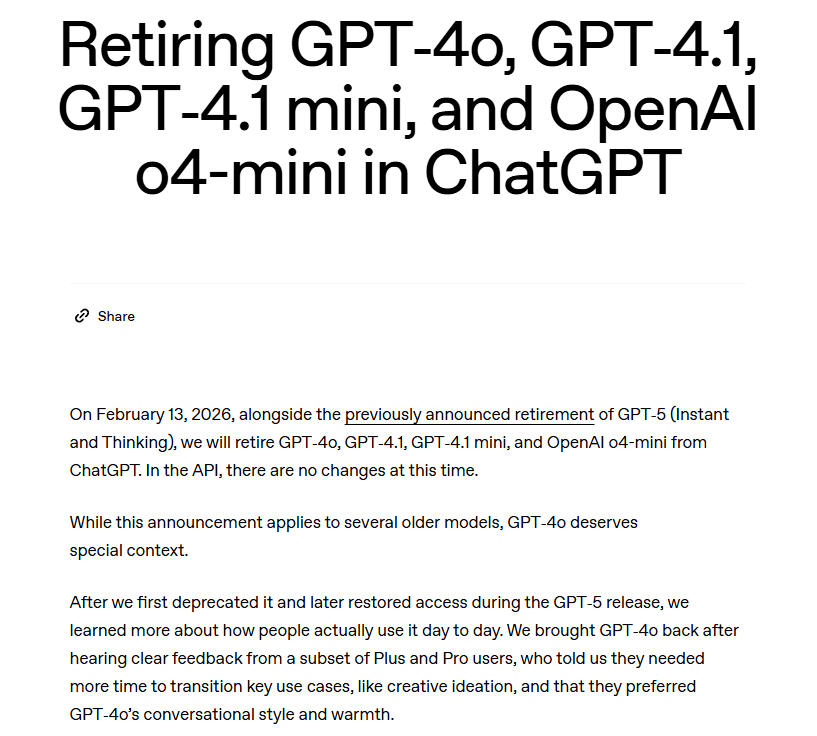
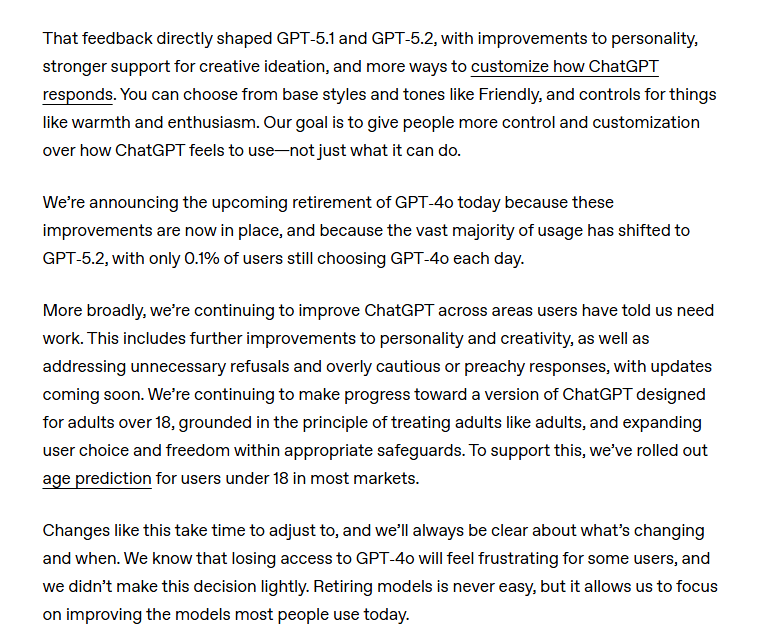
Source: Retiring GPT‑4o, GPT‑4.1, GPT‑4.1 mini, and OpenAI o4-mini in ChatGPT, OpenAI
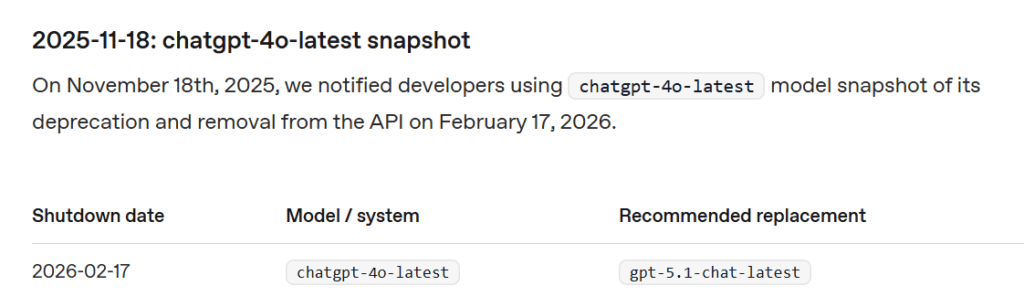
ChatGPT-4o-latest
GPT-5.0 and GPT-5.1
OpenAI retired the baseline GPT-5.0 (including both Instant and Thinking variants) from the ChatGPT web interface on February 13, 2026.
OpenAI retired the GPT-5.1 suite (including Instant, Thinking, and Pro models) across the ChatGPT interface on March 11, 2026.
GPT-4.5 and OpenAI o3
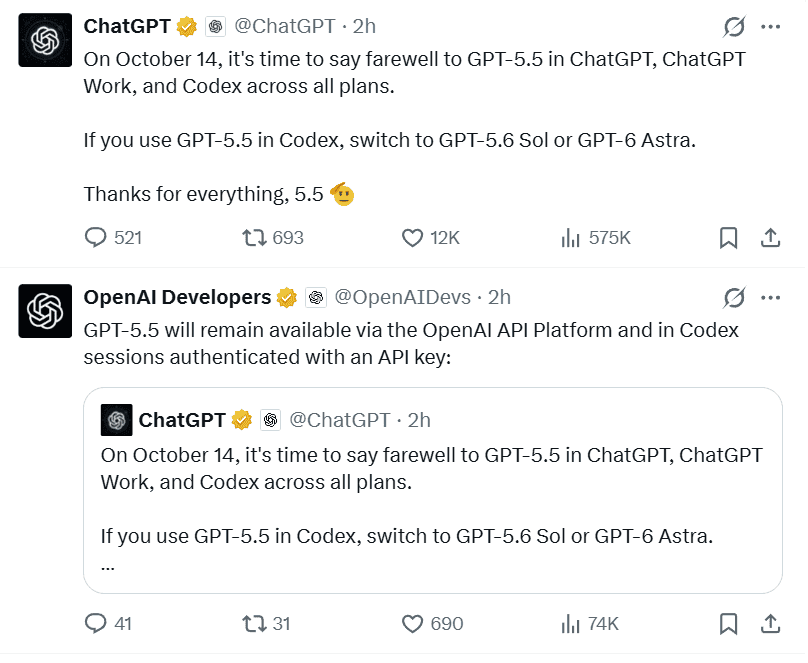
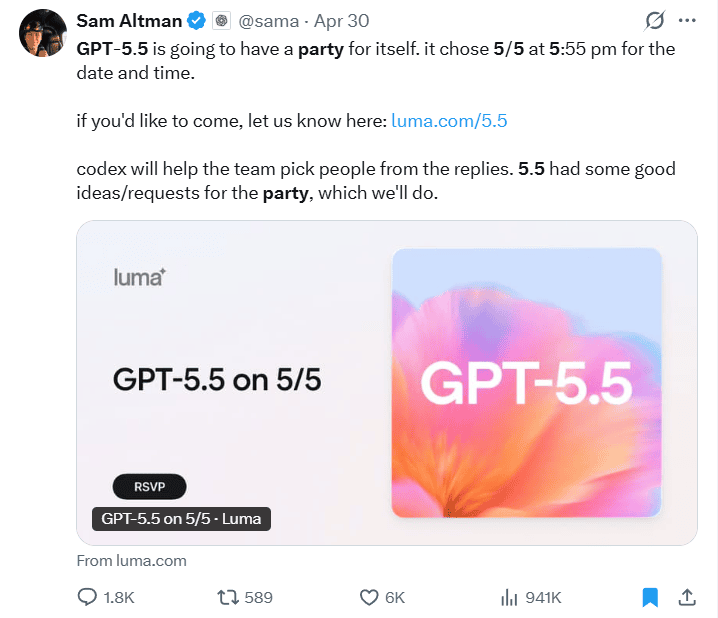
The Model That Had Its Own Party – GPT-5.5