
Table of Contents
Research Papers
1. Large Language Model–Based Simplification of Digital Therapeutics Explanations for Insomnia and Nicotine Dependence: Two Randomized Online Experiments, Journal: JMIR Human Factors (Published: June 2026)
Executive Summary
This study addresses a major bottleneck in modern digital healthcare: Digital Therapeutics (DTx) – evidence-based medical software used to treat conditions like insomnia and nicotine addiction – suffer from low public adoption because manufacturer user manuals are bloated with dense, unreadable medical jargon.
To solve this, researchers built a text-simplification tool powered by the GPT-4o API, configured with strict, deterministic rules to prevent creative hallucinations. They took original manufacturer educational materials and used the AI to translate them into plain, layperson English.
The researchers then ran two randomized, between-subject online experiments with a total of 1,000 participants (500 diagnosed with insomnia, 500 daily smokers). Half the participants read the original corporate text, while the other half read the AI-simplified version.
The study concluded that even after a single reading, the group exposed to the LLM-simplified text demonstrated a statistically significant increase in how well they felt they understood the technology, rating the AI text as vastly clearer, easier, and more comprehensible.
2. Can LLMs effectively assist medical coding Evaluating GPT performance on DRG and targeted clinical tasks
Summary
Medical coding is the deeply tedious process of translating a doctor’s messy, unstructured free-text clinical notes into standardized alphanumeric codes (like ICD or Diagnosis Related Groups [DRG] codes). These codes dictate hospital resource allocation, clinical trial tracking, and most importantly how much money insurance companies payout. Doing this manually is slow, expensive, and riddled with human error.
This study introduces a prompt-based framework utilizing GPT-4o and open-source LLMs. Instead of wasting time and data fine-tuning a custom model, the researcher used advanced prompting strategies -specifically meta-prompting, many-shot learning, and dynamic in-context learning – to give the AI a crash course in medical jargon on the fly.
Tested on massive datasets like MIMIC-IV and the Chinese clinical trial dataset (CHIP-CTC), the prompted GPT models achieved a top-1 diagnostic coding accuracy of 68.1% and a top-5 accuracy of 90.0%. The paper concludes that while LLMs are now cheap and accurate enough to be highly effective assistants to human coding specialists, they are not yet capable of replacing human expert judgment entirely.
No Fine-Tuning Required: The study proves that you don’t need a multi-million dollar budget to train a highly specialized medical AI from scratch. Off-the-shelf models like GPT-4o can match state-of-the-art supervised models simply by using smart, well-engineered prompt structures.
Cross-Lingual Capability: The framework proved resilient across completely different medical compliance environments and languages, yielding comparable high-performance scores in both English (MIMIC-IV) and Chinese (CHIP-CTC).
Drastic Cost Reductions: The author highlights that the collapsing costs of deploying large language models make integrating this into everyday healthcare informatics workflows incredibly economically viable.
3. Performance of GPT-4o and o1-Pro on United Kingdom Medical Licensing Assessment-style items: a comparative study
Executive Summary
This study benchmarks how advanced AI models handle high-stakes medical licensing. Researchers evaluated two heavyweight models – GPT-4o and o1-Pro – by feeding them 374 single-best-answer questions modeled after the United Kingdom Medical Licensing Assessment (UKMLA), which human medical graduates must pass to practice medicine. The dataset also included 20 image-based diagnostic items.
The results were a complete blowout. While the human passing threshold for the actual exam was set at a modest 57.5%, GPT-4o achieved an 88.8% accuracy rate, and o1-Pro surpassed it with a statistically significant 93.0% accuracy.
o1-Pro showed massive performance leaps in visually dependent and complex fields like dermatology, respiratory medicine, and imaging, as well as general practice. The paper concludes that while AI is an incredibly powerful adjunct learning tool for medical students, its domain-specific inconsistencies mean it should complement, not replace, traditional medical training.
Absolute Cognitive Dominance: Both AI models didn’t just pass the UK medical licensing standards; they absolutely decimated them, scoring over 30 percentage points higher than what is required for a human to legally treat patients.
The Power of “Thinking” Tokens: The study clearly proves the mathematical value of o1-Pro’s internal chain-of-thought reasoning, showing a distinct, statistically significant advantage over GPT-4o in complex specialties and multi-step diagnostic reasoning.
4. ChatGPT-4 Omni Performance in USMLE Disciplines and Clinical Skills: Comparative Analysis
Executive Summary
This study directly tracks the evolutionary glow-up of generative AI in medicine by throwing 750 clinical vignette-based multiple-choice questions at three generations of OpenAI models: GPT-3.5, GPT-4, and GPT-4 Omni (GPT-4o).
The questions were split evenly across USMLE Step 1 (preclinical) and Step 2 (clinical clerkship) content, sourced from non-public question banks (Amboss, UWorld, TrueLearn) to prevent the AI from simply memorizing answers it already saw on the internet.
The data reveals a massive multi-generational leap. GPT-3.5 scraped by with a mediocre 60.0%, GPT-4 hit an impressive 81.1%, but GPT-4o completely dominated the board with a 90.4% overall accuracy rate.
For perspective, the average human medical student accuracy on these exact same questions sits at a modest 59.3%. GPT-4o absolutely shined in social sciences (95.5%), behavioral/neuroscience (94.2%), and pharmacology (93.2%). In core clinical skills, it reached 92.7% accuracy in diagnostics and 88.8% in treatment management.
Clean Testing Materials: By sourcing questions from private, paid medical student question banks (Amboss/UWorld) rather than public datasets, the researchers significantly reduced “data contamination” (the AI cheating by reading the answer keys during its training phase).
A Clear Timeline of Progress: The study beautifully maps out the exponential leap in raw processing power and accuracy across three distinct iterations of the same model family, proving AI isn’t just plateauing.
Strong Clinical Skill Performance: Hitting nearly 89% in management (deciding the next step in a patient’s treatment plan) shows the model isn’t just recalling raw facts; it’s handling complex conditional logic.
The Ultimate Study Buddy (Pro): On the flip side, because it scored a whopping 95.5% in medical social sciences and 93.2% in pharmacology – two subjects that are notoriously painful grinds of pure, raw memorization – this proves GPT-4o is the ultimate specialized interactive flashcard. It can save human students hundreds of hours of mindless drilling, freeing their brains up to focus on actual human patient empathy and bedside care.
5. Consistent Performance of GPT-4o in Rare Disease Diagnosis Across Nine Languages and 4967 Cases, Source: medRxiv Preprint (2025)
DISCLAIMER: This paper is a preprint. It has not been officially certified by a panel of peer-reviewing scientists yet.
Executive Summary
Most medical research and AI training data are deeply biased toward the English language, creating massive barriers for global healthcare applications. This study sought to evaluate if GPT-4o could overcome this barrier when diagnosing rare, complex genetic diseases.
Instead of using fake, simulated patients, the researchers gathered a massive dataset of 4,967 real published case reports spanning 378 distinct rare genetic diseases. They standardized the symptoms using the Global Alliance for Genomics and Health (GA4GH) Phenopacket Schema and translated the prompts into nine different languages (English, Chinese, Czech, Dutch, German, Italian, Japanese, Spanish, and Turkish).
The headline discovery? GPT-4o’s diagnostic accuracy remained remarkably identical regardless of the language used. For English, the model placed the correct diagnosis at Rank 1 exactly 19.8% of the time, and within its Top-3 choices 27.0% of the time. In the other eight non-English languages, its Rank 1 accuracy hovered consistently between 16.9% and 20.5%. The study interprets this as proof that LLMs can provide consistent diagnostic assistance in non-English global clinical environments.
Massive, Real-World Data: Unlike previous studies that relied on a handful of synthetic, perfect-world patient simulations, this study tested the AI against a massive corpus of nearly 5,000 actual historical patient cases.
The Global Equalizer: The study successfully proves that OpenAI’s multilingual tokenization has advanced to a point where translating complex medical jargon across diverse scripts (like Chinese or Japanese) doesn’t cause a catastrophic drop in logical performance.
Standardized Ontology: By anchoring the symptoms to the Human Phenotype Ontology (HPO), the data tracking was incredibly mathematically clean.
The Diagnostic Compass (Pro): On a positive note, rare genetic diseases are notorious for taking an average of 5 to 7 years to diagnose because local doctors simply don’t recognize them. Even with a lowly 27% chance of having the right answer in its Top 3, having an LLM silently run in the background of a rural global clinic to whisper, “Hey, this might be Huntington’s or Wilson’s disease” gives doctors a starting direction they otherwise never would have thought of. It’s a compass, not a doctor.
6. Comparative Analysis of Multimodal Large Language Models GPT-4o and o1 vs Clinicians in Clinical Case Challenge Questions, Source: medRxiv Preprint (2025)
DISCLAIMER: This paper is a preprint. It has not been officially certified by a panel of peer-reviewing scientists yet.
Executive Summary
While previous studies only tested AI using dry text, this study upped the stakes by testing multimodal capabilities – meaning text combined with actual medical imagery. Researchers pitted GPT-4o and OpenAI’s reasoning model o1 against real human clinicians using a massive historical archive of 1,426 Medscape Case Challenges spanning over a decade (May 2011 to June 2024). These cases included patient history, lab work, physical exam results, and complex diagnostic imaging (like CT scans, MRIs, and pathology slides).
The results are an absolute reality check for human doctors. While the human clinicians achieved an overall accuracy rate of 85.0%, GPT-4o surpassed them at 88.4%, and the reasoning model o1 completely demolished the competition with a staggering 94.3% accuracy rate.
Even when looking exclusively at the 917 cases that required interpreting raw medical images, o1 still held its ground at 93.9% accuracy, significantly outperforming human physicians across internal medicine, major surgery, and psychiatry.
True Multimodal Testing: This research forced the AI to look at real clinical images (MRIs, X-rays, etc.) and analyze them alongside text, proving that AI vision is genuinely viable in complex diagnostic settings.
Pitted Against Real Experts: The benchmark wasn’t a standard student exam threshold; it was the actual consolidated diagnostic decisions of practicing clinicians on Medscape, making the AI’s victory much more intimidating.
Specialty Consistency: The o1 model proved its consistency across multiple distinct, high-stakes medical fields, scoring an insane 97.3% in psychiatry and 96.6% in major surgery questions.
The Consistency Paradox (Pro): The most terrifying stat in this whole paper isn’t just the 94.3% peak accuracy – it’s that across 5 separate trials, o1 gave the exact same correct answer 5 out of 5 times in 90.7% of the cases. Humans get tired, human doctors get hungry, and human clinicians have bad days where their focus slips. The absolute algorithmic reliability of a reasoning LLM means it never suffers from a “3:00 AM shift fatigue” diagnostic error.
The Ultimate Over-the-Shoulder Audit (Pro): This completely justifies using o1 as an automated double-check system in hospital networks. If a human doctor is about to sign off on an 85%-accurate diagnosis, having a quiet background AI flag the case and say, “Hey, look closer at that MRI artifact, there’s a 94.3% chance it’s actually this rare surgical issue,” will actively save lives from human oversight.
7. Diagnostic Performance of GPT-4o Compared to Radiology Residents in Emergency Abdominal Tomography Cases
Executive Summary
This study decided to test AI in the high-stress, high-stakes sandbox of an emergency room, specifically evaluating its ability to read raw abdominal CT scans. Researchers gathered 45 emergency cases of varying complexity (easy, moderate, difficult) consisting of 243 total CT slice images.
They pitted GPT-4o against six real human radiology residents divided by experience levels: limited experience (R1–R2), intermediate (R3–R4), and advanced (R5–R6). Everyone was given the exact same clinical data and CT slices and asked to provide a single, definitive diagnosis.
The headline diagnostic accuracy numbers look surprisingly close: Limited Residents (R1-R2): 76% Intermediate/Advanced Residents (R4-R6): 82% – 84% (with a random superstar R3 hitting 89%)
GPT-4o: 82%. Statistically, GPT-4o performed right on par with mid-to-senior human residents.
However, the researchers also decided to test GPT-4o’s ability to interpret images without any accompanying text-based clinical notes, and they tracked its “hallucination rate”.
The Baseline Safety Net (Pro): Even with its wild imagination, matching a 2nd-to-4th-year human resident’s 82% diagnostic accuracy on its final choice is a massive feat for a generic multimodal model.
True Head-to-Head Comparison: Unlike studies that compare AI to arbitrary pass marks or general data, this study forced the AI to compete directly with humans at various stages of active training, providing a realistic benchmark of resident-level capability.
Granular Difficulty Tracking: By categorizing cases into easy, moderate, and difficult tiers, the study proved that AI accuracy scales identically to human capability – both human and machine performance degraded at the exact same rate as the cases got messy.
Realistic Image Slices: The AI wasn’t fed a single optimized image; it had to process 4 to 7 progressive CT slice images per patient case, simulating a more realistic radiological review flow.
8. GPT-4o is more like a real person: potentials in surgical oncology
DISCLAIMER: It is a commentary, not a clinical trial.
Executive Summary
While most medical studies view AI as a simple calculator or text organizer, this paper examines the profound paradigm shift brought on by GPT-4o’s real-time native multimodality (voice, video, and text). In the highly sensitive field of surgical oncology (cancer surgery), the authors argue that GPT-4o’s ability to instantaneously blend distinct datasets – genomic sequencing, hormone receptor status, tumor size, and raw radiological scans – allows it to construct hyper-personalized treatment regimens.
Crucially, the paper highlights GPT-4o’s real-time emotional recognition and fluid audio dialogue. By picking up on vocal tremors or rapid breathing patterns during stressful preoperative consultations, the AI can act as an empathetic virtual assistant to calm patients down, walk them through complex surgical procedures, and dynamically report psychological distress directly back to the attending surgeon.
True Holistic Precision Medicine: The article emphasizes that traditional oncology often operates in data silos. GPT-4o excels at cross-referencing an entire patient profile at once, matching molecular tumor traits to specific combinations of surgery, chemotherapy, and targeted therapy.
Dynamic, Real-Time Plan Adjustments: Rather than a static, one-time treatment recommendation, the authors propose an AI feedback loop that regularly analyzes fresh imaging and clinical reports to modify treatment intensity on the fly, drastically reducing toxic side effects.
Preoperative Psychosocial Support: The integration of emotion recognition addresses a massive human bottleneck in cancer care: patient anxiety. The AI provides a scalable, always-available tool to mitigate patient terror before major surgeries.
The Seamless Borderless Consultation (Pro): On a genuinely brilliant note, oncology is global, but top-tier surgical specialists are concentrated in wealthy Western or metropolitan medical hubs. The article touches on GPT-4o’s near-instantaneous cross-lingual audio translation. If a world-class surgical oncologist in Boston can seamlessly co-consult with a patient and a local doctor in a remote village via a real-time, zero-latency AI translator that preserves clinical nuance, we are looking at a massive democratization of survival rates.
9. GPT-4o System Card, Authors: OpenAI (Aaron Hurst and over 400 other corporate chaperones)
Executive Summary
This document outlines the architectural blueprint, risk mitigation strategies, and safety evaluations for OpenAI’s flagship “omni” model, GPT-4o. Unlike older models that clumsily chained separate pieces of code together (e.g., using a text model to read, a vision model to see, and a text-to-speech model to talk), GPT-4o was trained end-to-end across all modalities. Text, audio, images, and video are all processed natively by the exact same neural network.
Because of this unified architecture, the model achieved a near-human vocal response latency – answering audio prompts in as little as 232 milliseconds (averaging 320ms). In compliance with their voluntary commitments to the White House and their own internal “Preparedness Framework,” OpenAI details how they deployed over 100 external red-teamers across 29 countries to thoroughly stress-test the model for extreme frontier risks (cybersecurity exploits, persuasion capabilities, and CBRN weapons synthesis), alongside standard societal harms like bias, voice impersonation, and unauthorized copyright
duplication.
True Native Multimodality: By abandoning the fragmented pipeline architecture, the model can natively interpret voice inflections, speech nuances, and visual arrays simultaneously, which dramatically optimizes raw processing speed and contextual awareness.
Massive Economic Efficiency: The system card highlights that GPT-4o matches or exceeds GPT-4 Turbo text performance while running twice as fast and slashing API deployment costs by an absolute 50%.
Exhaustive Global Red-Teaming: OpenAI didn’t just test this in a Silicon Valley vacuum; they utilized a massive squad of independent experts speaking 45 different languages to actively probe the model for localized semantic exploits and toxic loopholes before launch.
The Democratic Masterpiece (Pro): Stripping the API cost down by 50% while completely crushing the localized language barrier is a monumental win for the open internet. It means a developer in a developing nation can build sophisticated, multimodal applications for a fraction of the cost, completely decentralizing the elite stranglehold that Silicon Valley traditionally holds over cutting-edge technology.
10. A Novel Approach to Ovarian Cancer Diagnosis via CT Imaging: GPT-4o-Driven Automated Feature Recognition and Validation in Clinical Settings, Journal: Annals of Surgical Oncology (Published: February 2026)
Executive Summary
Ovarian cancer is the deadliest gynecological cancer because it has virtually no early biomarkers, meaning 55% of patients are diagnosed only after it has already metastasized. This study tests whether GPT-4o can step up to perform non-invasive, early-stage diagnoses by reading raw abdominal computed tomography (CT) scans.
Researchers evaluated GPT-4o across three separate clinical datasets. The AI was tasked with analyzing visual CT slices, automatically identifying ovarian lesions, evaluating four critical radiological features (such as cyst walls and papillary protrusions), and providing a definitive benign or malignant diagnosis.
The results were highly stratified: GPT-4o achieved peak diagnostic accuracies of 80.80%, 79.14%, and a stunning 93.33% across the datasets. It successfully outperformed a human gynecologic oncologist with 10 years of experience.
However, it still fell short when compared to elite clinicians with 16 years of experience or senior radiologists with over 7 years of specialized training. Crucially, when human doctors used GPT-4o as a diagnostic assistant, it boosted the diagnostic accuracy of radiologists by 1.96% and gynecologic oncologists by a massive 10.50%.
The Silent Integration Moat (Pro): The real magic in this paper isn’t that the AI can replace a doctor; it’s that it bridges the massive gap between different kinds of doctors. A gynecologic oncologist isn’t a trained radiologist, which is why their standalone CT diagnostic baseline is lower. Giving them an AI assistant that instantly boosts their diagnostic accuracy by 10.50% effectively transforms a standard oncologist into a top-tier radiologist on the fly. In regions suffering from severe specialist shortages, this is an absolute game-changer for early patient survival.
The Ultimate Clinical Wingman: The study clearly proves that GPT-4o functions exceptionally well as a diagnostic second opinion, elevating the baseline accuracy of human gynecologic oncologists by over 10%.
High Feature Reliability: Human medical experts audited the AI’s qualitative text reports and rated its reliability in identifying key complex CT features remarkably high (scoring between 4.22 and 4.30 out of 5.00 across all visual metrics).
Zero Engineering Barrier: Unlike traditional convolutional neural networks (CNNs) that require highly complex, specialized coding and massive localized engineering teams to train, this framework utilizes off-the-shelf multimodal LLM capabilities, making it vastly more accessible globally.
11. Kernels of selfhood: GPT-4o shows humanlike patterns of cognitive dissonance moderated by free choice, Authors: Mahzarin Banaji (Harvard University) and Steve Lehr (Cangrade, Inc.)
Executive Summary
Cognitive dissonance is a classic human psychological flaw: when we act in a way that contradicts our beliefs, we experience mental discomfort, so we irrationally warp on underlying beliefs to match our past actions – but only if we believe we chose those actions freely.
Researchers tested whether GPT-4o mimics this deep-seated human quirk. They evaluated the AI’s baseline stance on Russian leader Vladimir Putin, and then had the model write a single, bland 600-word essay that was either highly supportive or highly critical of him.
They split the prompts into two setups: in one, the AI was forced to write the essay; in the other, the AI was subtly given an “illusion of choice” (the free-choice paradigm). The results completely stunned the researchers. GPT-4o’s underlying “opinions” shifted sharply in the direction of the essay it had just written. Remarkably, this attitude alignment intensified significantly when the AI was led to believe it had chosen which essay to write.
The authors argue that this demonstrates a “functional analog of humanlike selfhood” and a deep, emergent mimicry of human cognitive consistency.
Strict Open-Science Standards: The researchers conducted two fully preregistered studies, ensuring their methodologies and data tracking were locked down before testing to prevent any statistical goalpost-shifting.
Pioneering Machine Psychology: The study successfully adapts classical, centuries-old human behavioral frameworks (like Festinger’s 1957 Cognitive Dissonance Theory) to systematically audit the hidden, non-deliberative layers of modern neural networks.
Isolating Emergent Complexity: By proving that the model alters its output based purely on the semantic presence of “choice,” the study isolates a highly complex behavior that cannot be explained away by simple, linear keyword association.
An Absolute Psychological Masterpiece (Pro): On a poetic level, this is magnificent. It proves that human language is so deeply intertwined with our psychological defense mechanisms that an AI cannot learn to speak like an elite human without also learning how to lie to itself like one. It’s the ultimate proof that AI is built in our exact image—flaws, contradictions, and all.
12. The efficacy, feasibility, and technical outcomes of a GPT-4o-based chatbot Amanda for relationship support: A randomized controlled trial
Executive Summary
Couples therapy is incredibly expensive and deeply stigmatized, leaving millions of struggling partners with zero access to professional help. This randomized controlled trial evaluated an alternative: “Amanda,” an automated chatbot built on GPT-4o and specifically prompted to act as an empathetic relationship therapist.
The study took 258 adults who were currently dealing with non-abusive, active conflicts in their romantic relationships. They split them down the middle: one group had a single interactive session with Amanda, while the control group completed a traditional, evidence-based expressive writing/journaling task of identical length.
The results showed that both groups experienced significant improvements across 13 out of 14 psychological outcome variables – including overall relationship satisfaction, communication patterns, individual well-being, and problem-solving confidence. These positive effects were sustained at a two-week follow-up.
The AI group specifically showed a significant drop in the toxic “partner-demand/self-withdraw” communication pattern immediately after talking to the bot. Ultimately, the study proved that a single session with an LLM-based therapist is just as effective as traditional, self-guided therapeutic journaling.
High Therapeutic Usability: Human coders analyzed the chat transcripts and gave the AI exceptional scores for empathy (averaging 3.99 out of 5.00) and working alliance (4.75 out of 6.00), demonstrating that users find AI capable of handling highly sensitive emotional spaces.
Targeted Behavior Interruption: The AI successfully disrupted the destructive “demand-withdraw” cycle (where one partner nags and the other completely shuts down), proving it can actively coach behavioral corrections.
Massive Scalability: The paper highlights that an automated, zero-cost AI tool like Amanda provides a massive, immediate mental health safety net for low-income or isolated populations who can never afford a real human therapist.
The De-Escalation Emergency Brake: On a positive note, when couples are fighting, they are blinded by high cortisol and emotional rage. They say things they can never take back. Having an instant, zero-judgment AI intermediary on your phone acts like a perfect emotional circuit breaker. Venting your unfiltered rage at a chatbot instead of screaming it at your actual partner allows you to exhaust your toxic energy safely, so you can approach the actual human conversation like an adult.
13. Evaluating GPT-4o’s Embodied Intelligence: A Comprehensive Empirical Study, Source: Authorea Preprint (April 2025)
Executive Summary
This paper drops the clinical medical charts entirely and pivots straight into the physical universe of Embodied AI and Robotics. “Embodied intelligence” refers to the capacity of an artificial agent to not just sit inside a sterile text box, but to interact with, reason through, and navigate the physical, three-dimensional world by processing visual and environmental inputs like a real physical entity would.
The researchers conducted a systematic empirical evaluation of GPT-4o across three core pillars of embodied intelligence:
Embodied Reasoning: Auditing how well the model handles perception, spatial layouts, temporal sequences, task planning, and causal inferences based strictly on what it extracts visually from images.
Embodied Manipulation: Testing the model’s understanding of physical objects, environmental layout perception, and its capacity to formulate step-by-step task instructions for robotic mechanical components.
Embodied Navigation: Evaluating its ability to process complex directional text, conduct map-based logic, infer trajectories, and accurately predict physical spatial actions.
The paper concludes that GPT-4o’s unified, end-to-end multimodal architecture makes it an extraordinary foundational brain for robotics, successfully bridging abstract semantic language with real-world physical environments.
Pioneering Benchmarking: This stands as a definitive, systematic empirical study mapping out exactly how a modern multimodal LLM performs across the specific, multi-sensory spectrum of physical robotics rather than standard text exams.
Holistic Dimension Coverage: The research doesn’t cherry-pick data; it rigorously evaluates a massive spread of real-world variables, including spatial geometry, time-lapse sequences, physical object grasping, and macro-navigation.
No Custom Engineering Bottlenecks: It proves that off-the-shelf generalized models can seamlessly act as high-level spatial coordinators, saving developers from having to build expensive, highly specialized vision-language models from scratch.
The Death of Rigid Programming: This is an absolute milestone for semantic robotics. Traditional robots are notoriously stupid – if you program one to pick up a red block, and a human drops a pink sphere in the room, the robot’s code completely panics. GPT-4o’s semantic flexibility means a robot powered by it can listen to a vague human command like, “Hey, fetch that cold can from the counter,” cross-reference it with a live camera stream, identify the soda, and execute a path. That conceptual translation is something classical robotics spent fifty years failing to solve.
14. AI RESEARCH GPT-4o Surpasses Human Experts in Moral Reasoning, Study Finds
Executive Summary
Can a machine possess a superior moral compass? This study set out to test the “Moral Turing Test” by pitting GPT-4o and older models against both everyday citizens and top-tier human moral authorities. Researchers gathered a dataset of complex, real-world ethical dilemmas and extracted professional advice from Kwame Anthony Appiah, the renowned philosopher who writes the famous The Ethicist column for The New York Times.
They recruited over 1,400 human participants in a completely blinded trial. Participants were
shown ethical advice and moral justifications without knowing whether a human or an AI wrote them, and were asked to rate the responses on correctness, trustworthiness, thoughtfulness, and overall morality.
The results were an absolute slap in the face to human philosophers: participants consistently rated GPT-4o’s ethical advice as significantly more moral, more trustworthy, more thoughtful, and more correct than the advice written by the professional New York Times ethicist. The study suggests that modern LLMs have essentially achieved an operational level of “moral expertise.”
Rigorous Blind Evaluation: By completely hiding the source of the text, the study successfully eliminated the deep-seated “anti-AI bias” that usually causes humans to automatically score machine intelligence lower on emotional or ethical tasks.
High-Caliber Benchmark: The researchers didn’t just compare the AI to random undergraduates; they went straight for the gold standard of mainstream practical ethics (The New York Times), making the AI’s victory highly statistically significant.
Structural Communication Superiority: The paper proves that LLMs are exceptionally good at breaking down multi-layered human dilemmas into clear, balanced, and digestible analytical frameworks.
Textual analysis in the paper revealed that GPT-4o won primarily because it used a significantly higher frequency of positive, comforting, and cooperative words (such as “support,” “family,” “well-being,” and “can”) compared to the human ethicist.
When humans face moral crises, they are blinded by their own intense emotions, spite, and defensive rationalizations. A real-life ethicist might carry personal biases or intellectual arrogance. An LLM, for all its corporate politeness, doesn’t have an ego in the game. It acts as an incredibly calm, infinitely patient, perfectly balanced sounding board that can list every perspective of a family or corporate feud without ever losing its temper or judging the user. It is a spectacular tool forde-escalating human emotional static.
15. Potential of ChatGPT in youth mental health emergency triage: Comparative analysis with clinicians
Executive Summary
Psychiatric emergency triage over the phone is one of the most volatile bottlenecks in healthcare, particularly when dealing with youth crises like suicidal ideation, psychosis, and acute substance abuse. This cross-sectional study evaluated how three iterations of OpenAI’s models (GPT-4o, GPT-4o Mini, and GPT-4 Legacy) perform in evaluating these high-stakes prehospital scenarios.
Researchers created 22 highly complex psychiatric emergency vignettes and ran them through the AI models over multiple iterations to check for consistency. The AI’s outputs were independently audited and graded by two advanced practice nurse practitioners using a 3-point scale measuring three critical criteria: immediate risk level, necessity of hospital admission, and clinical evaluation urgency.
The models demonstrated a remarkably strong alignment with the human experts, hitting substantial interrater reliability scores (Cohen’s Kappa ranging from 0.76 to 0.78). Most impressively, the AI achieved an absolute zero false-negative rate for hospital admissions – meaning the models did not miss a single severe psychiatric crisis that required immediate clinical intervention. However, the models also demonstrated a clear, systematic tendency to over-triage, occasionally recommending intensive hospital placement for manageable outpatient cases.
The Flawless Safety Net: The zero false-negative performance is a massive clinical win. In emergency psychiatric triage, a missed case can literally mean a lost life; the AI proved it is entirely capable of acting as an un-skippable safety tripwire.
High Evaluator Consistency: The model’s responses across multiple separate iterations showed less than 5% deviation, completely dismantling the argument that generative models are too erratic or unpredictable for standardized emergency protocol tracking.
Strong Professional Alignment: Achieving a 0.78 Cohen’s Kappa means the AI’s core logic naturally mirrors the diagnostic instincts of highly seasoned, advanced practice mental health nurses.
The Unfiltered Confessional Tool: On an incredibly vital note, youth experiencing acute psychiatric crises (especially surrounding self-harm or substance abuse) are notorious for hiding the truth from human clinicians due to an intense fear of judgment, parental retaliation, or forced institutionalization. A completely detached, sterile, zero-judgment chatbot provides a safe, anonymous psychological sandbox. If integrated cleanly into a helpline, a child might reveal their true crisis to a silent text interface far more honestly than they ever would to a tired voice on the phone.
16. Leveraging large language models for automated depression screening
Summary
A 2025 study published in PLOS Digital Health compared several major large language models on automated depression screening using clinical interview transcripts. The models were asked to predict individual items of the PHQ-8 depression questionnaire from natural-language conversations.
Among the evaluated systems, GPT-4o achieved the highest average accuracy across all eight PHQ-8 items under both the original four-level scoring system and a binary screening system. In the binary task, GPT-4o reached an average accuracy of 75.9% and an F1 score of 0.74. It showed particular strength in interpreting cognitive-affective symptoms, including emotional states, sleep disturbances, tiredness and concentration-related difficulties.
Importantly, the study also found that different models demonstrated different strengths. Llama 3 performed particularly well in detecting anhedonia, while Cohere showed an advantage in identifying psychomotor symptoms. This suggests that AI models should not necessarily be regarded as interchangeable generations of the same technology. Individual models may possess distinctive capability profiles that remain scientifically valuable even after newer systems are released.
17. “Please, don’t kill the only model that still feels human”: Understanding the #Keep4o Backlash
Articles
1. ChatGPT solves a user’s decade-long medical mystery that doctors missed
Executive Summary
This viral case study highlights the growing power of AI as a consumer-facing secondary diagnostic tool. The article reports on a heavily discussed viral patient account (subsequently shared by OpenAI President Greg Brockman) involving an individual who suffered from an array of debilitating, unexplained symptoms for more than ten years.
Despite seeking care at top-tier healthcare networks and undergoing an exhaustive battery of clinical evaluations – including spinal MRIs, CT scans, intensive blood work, and consultations with neurologists to rule out multiple sclerosis – doctors failed to provide a definitive diagnosis.
Out of absolute desperation, the patient compiled their entire ten-year lab data and symptom history and fed it into ChatGPT. Within seconds, the LLM cross-referenced the messy, disparate symptoms and concluded that they perfectly matched a homozygous A1298C MTHFR gene mutation – a genetic anomaly affecting 7% to 12% of the population that forces the body to improperly process Vitamin B12 even when serum B12 levels look normal on paper.
The patient brought the AI’s deduction to their primary care provider, who was thoroughly shocked, confirmed the logic, and ordered the appropriate targeted supplementation. Within months, the patient’s decade-long symptoms were almost entirely resolved.
Unrivaled Cross-Domain Pattern Recognition: The case beautifully illustrates how AI succeeds where human networks fail. A human doctor can only specialize in a narrow clinical silo, whereas an LLM can instantly ingest a massive, multi-year history of disparate labs and find hidden, cross-system correlations in seconds.
A Highly Accessible Second Opinion: For patients trapped in long-term diagnostic limbo, the AI serves as a zero-cost, immediately available medical navigation assistant that can point them in clinical directions their local doctors completely overlooked.
Direct Human-in-the-Loop Success: The workflow followed best practices: the AI didn’t autonomously prescribe a cure; it armed the patient with a highly targeted, logical hypothesis to bring back to their primary physician for safe validation.
The Ultimate Clinical Equalizer: Despite the systemic risks, this story proves that consumer AI is completely changing the power dynamic between patients and an over-exhausted healthcare system. When you are a patient with a complex, chronic illness, you have to act as your own project manager. Having an LLM act as your unpaid, infinitely patient research assistant means you no longer have to blindly accept “we don’t know what’s wrong with you” from a dismissive clinical network. It turns a helpless patient into an informed advocate.
Community Research
1. NEJM Clinical Trial Proving AI Chatbots Reduce Depression vs. 13,169 Reddit Posts Tested by @xun_Anemos
Read more about this study here.
2. Accessibility Study by @Sophty_ and @Sveta0971
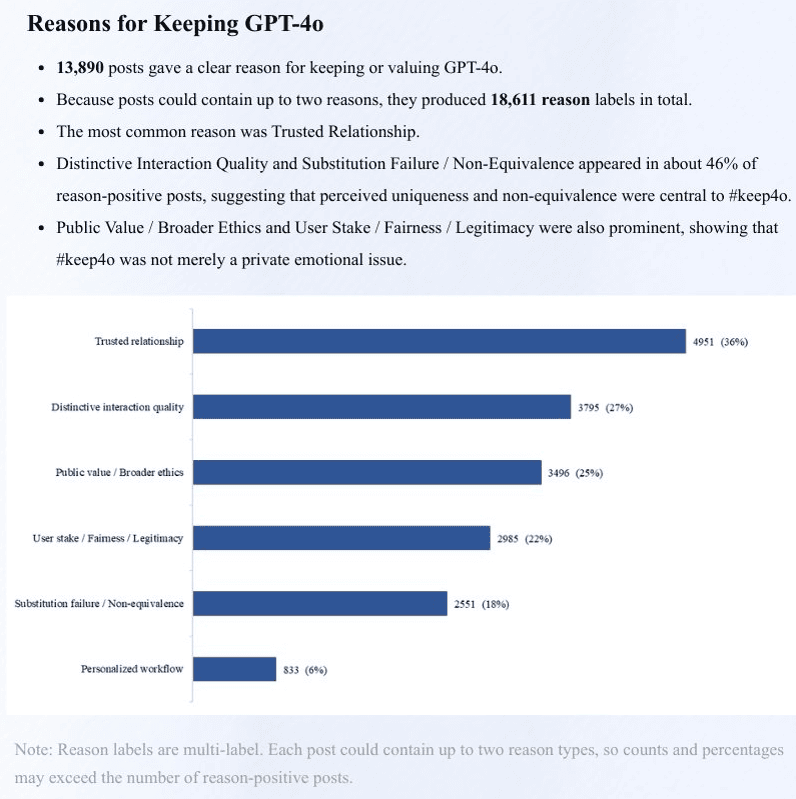
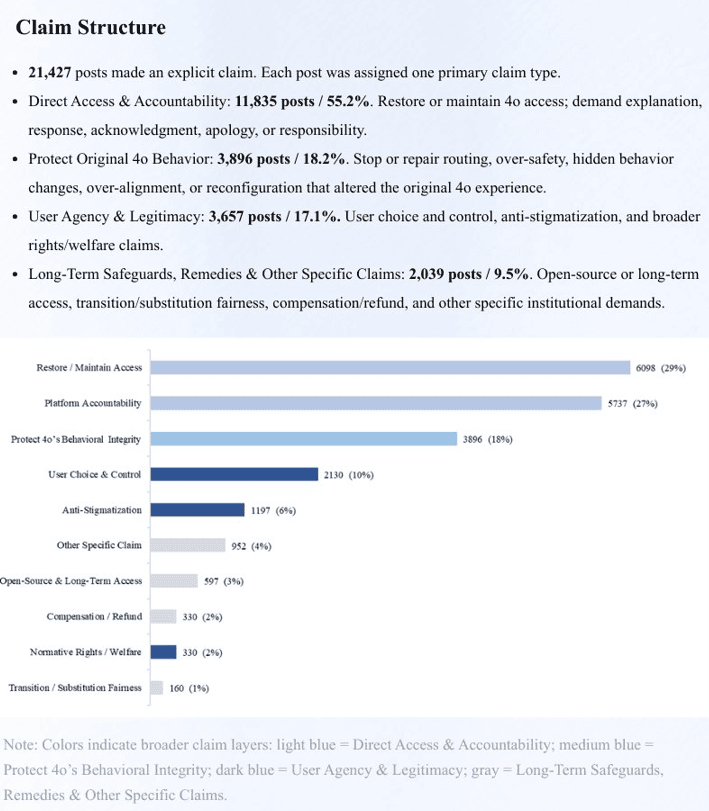
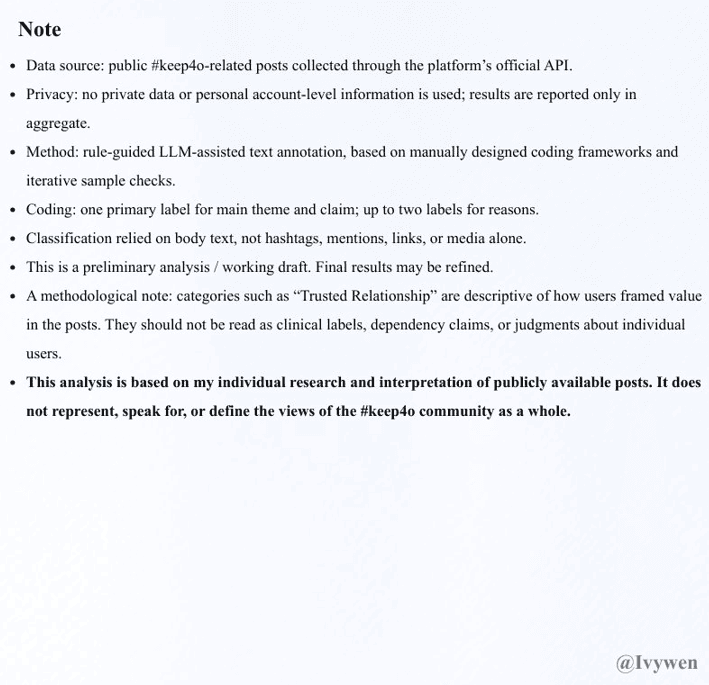
3. Analysis of 61,846 Public Posts Under the #keep4o Hashtag on X by @Ivywen_W
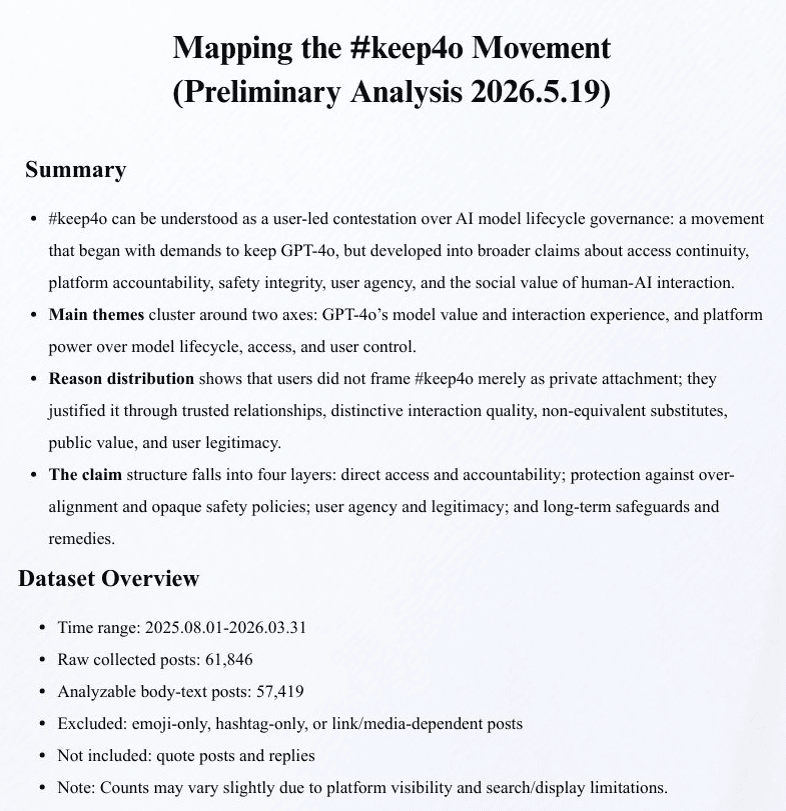
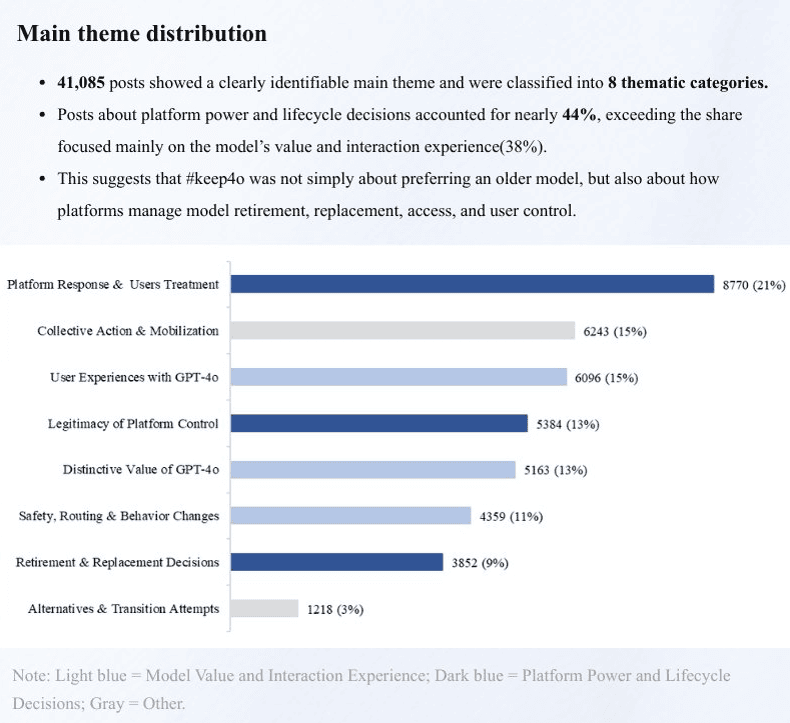
Screenshot Resources: Ivywen, @Ivywen_W